

Collin County Property Management Services Guide
Discover essential property management services in Collin County that enhance owner profitability, streamline operations, and improve tenant...
6 min read

Tenant screening is the process of reviewing rental applicants before you offer a lease. It uses the same rules, proof, and notes for every person. Done well, it helps landlords and property managers cut risk, protect the unit, and choose residents who are more likely to respect the lease. If you are screening tenants for rental property, a repeatable process keeps the work orderly. This guide lays out a practical tenant vetting process with applications, background checks, income review, references, and the final decision.
Tenant screening matters because the person you approve affects rent, maintenance, neighbor relations, and the work that follows after move-in. Screening tenants for rental property is not about hunting for perfection. It is about making a fair, steady choice from the facts in front of you. A disciplined process reduces rushed approvals, emotional calls, and uneven rules that can lead to legal or operational trouble.
For furnished homes, the risk profile is different. Furniture, decor, appliances, and turnover timing raise the stakes. Best practices for screening tenants for furnished rental property should include standard rental checks plus extra attention to lease terms, occupancy, deposits where allowed, and intended use.
Before you accept applications, write your tenant selection criteria. Clear criteria keep the process organized and let every applicant know what will be reviewed. They also give landlords and property managers one rule set to use across every file.
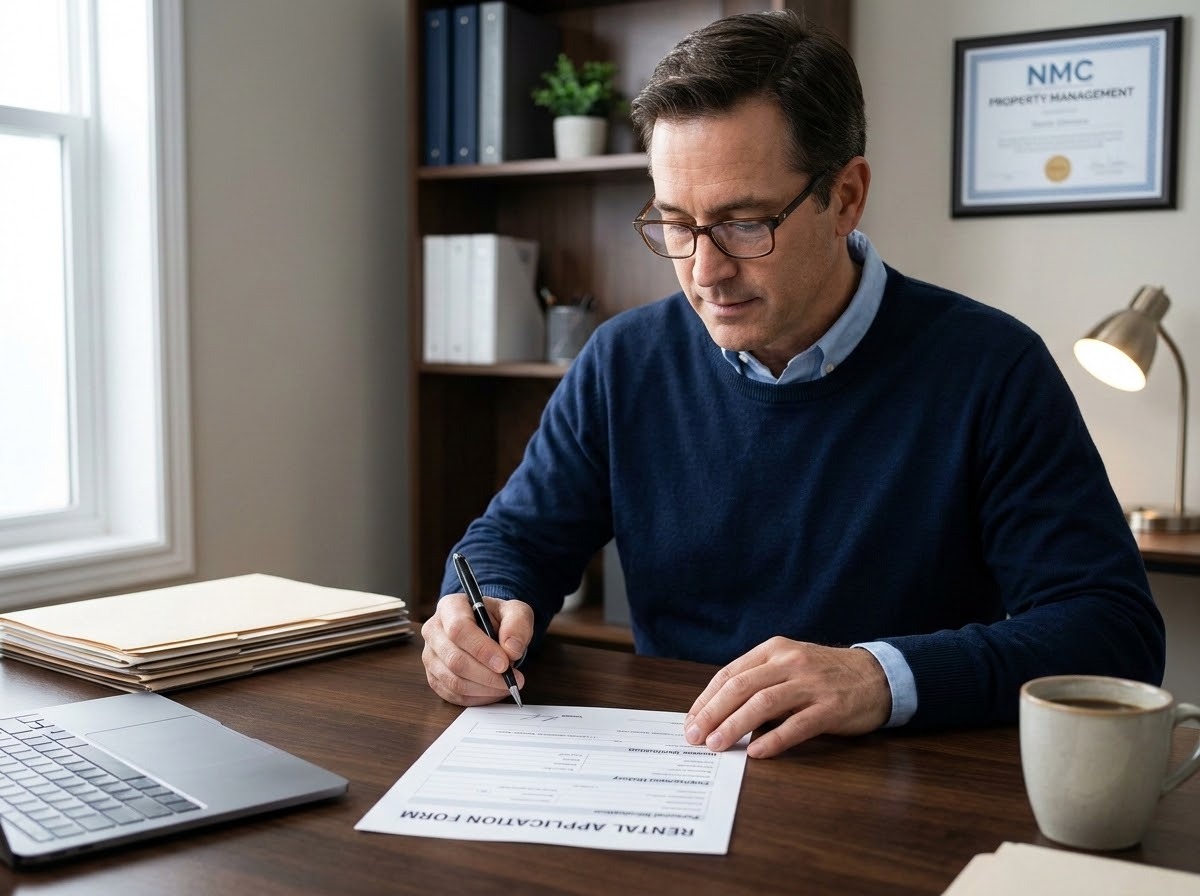
Common criteria may include:
The key is to use rules tied to tenancy and apply them the same way each time. Avoid vague language like special fit. Consistency is one of the best tenant screening tips for any rental owner.
A rental screening checklist helps you avoid small misses that become bigger problems later. It also makes rental property screening easier to repeat, whether you manage one home or a large portfolio.
Your checklist should include these core steps:
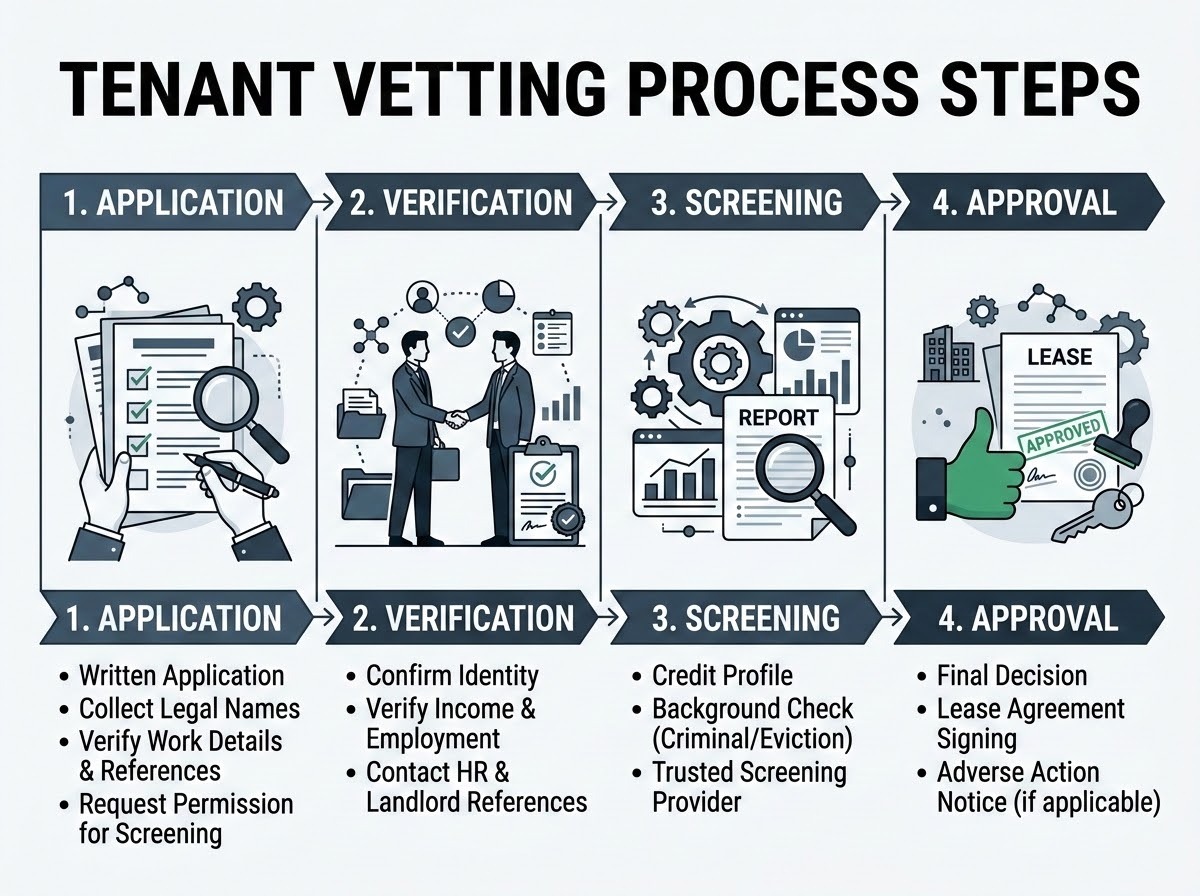
This structure keeps the process from becoming guesswork. It turns tenant screening into a repeatable system.
A tenant background check should include information that helps you judge risk while staying within fair housing, privacy, and local law. Depending on your provider and area, it may include eviction history, criminal records, identity checks, credit info, and address history. The goal is not to collect every possible detail. It is to review relevant records with care and fairness.
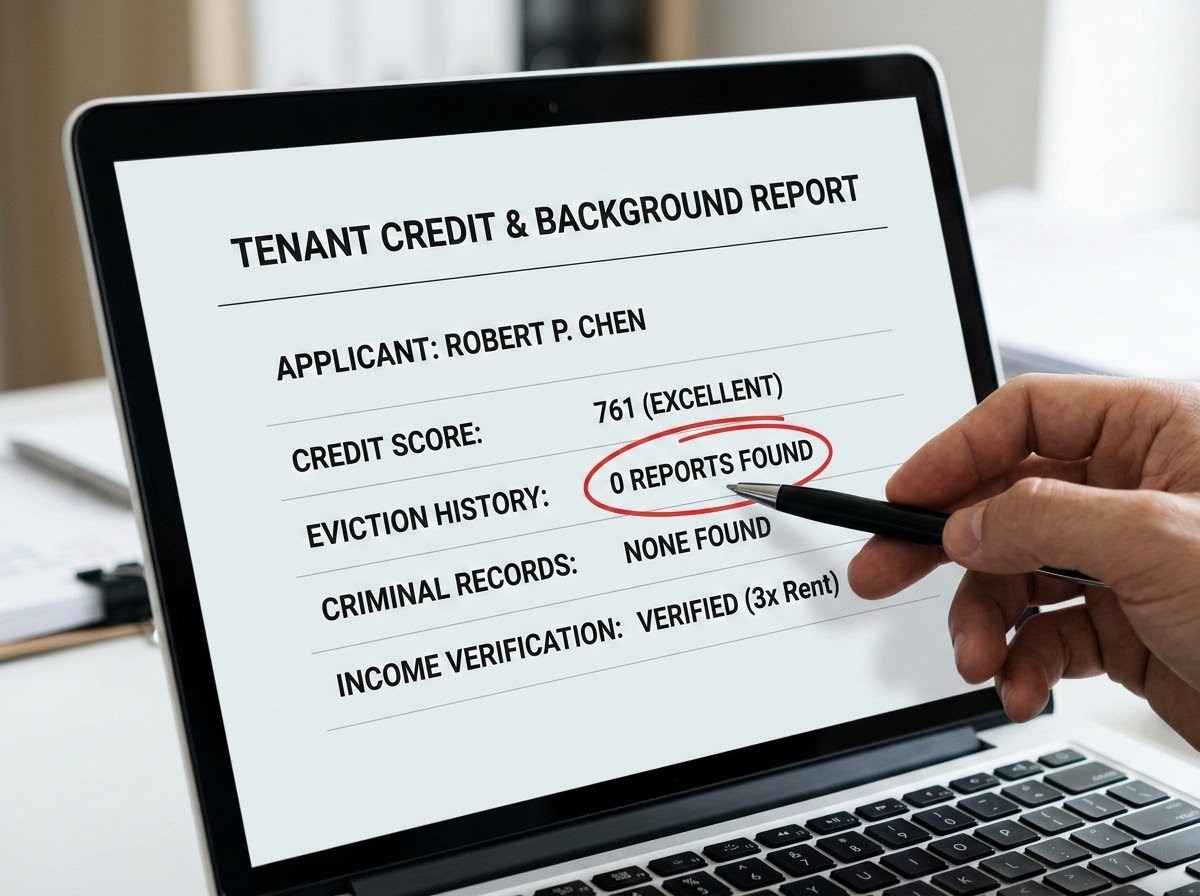
A background report should never be the only factor. For example, a credit report may show late payments, but income, rental history, and current circumstances can matter too. If you use screening reports, make sure the applicant gives permission and that you follow the required adverse action steps when needed.
For a property manager tenant screening workflow, approved tools and clear steps can reduce bias and improve consistency. Still, human review matters. Compare the report with your written criteria. Do not use it as a shortcut for guesses.
Income verification is one of the most practical parts of rental screening because it ties directly to rent. Common papers can include recent pay stubs, offer letters, bank statements, tax forms, or proof of other lawful income. The right proof may change based on whether the applicant works for someone else, is self-employed, is retired, or is moving.
Look for consistency. Do the documents match the application? Is the income steady or temporary? Is the move-in date realistic based on the applicant's work situation? These questions help you review the file without turning the process into a grilling.
For furnished rentals, income review can matter even more when leases are short, or rent is higher because furnishings and utilities are included. If the lease is seasonal, corporate, or short-term, make payment timing and lease duties clear up front. Clear expectations reduce confusion after move-in.
Rental history can show patterns that screening reports may miss. A prior landlord can confirm whether the applicant gave notice, paid on time, followed rules, and left the home in good shape. This is especially useful when the credit report is thin, or the applicant is new to the area.
Ask focused questions instead of broad ones. Useful landlord reference questions include:
Be careful if a reference seems vague, will not answer basic tenancy questions, or looks like a personal contact rather than a landlord. Checking this is part of a strong tenant vetting process.
Furnished rentals bring extra rules. The tenant is not only renting the home; they are also using furniture, fixtures, and often chosen household items. Your screening and lease process should be clear on care standards, inventory, repair reporting, and what happens if items are damaged or missing.
Strong furnished rental screening should cover:
These steps protect both sides. The tenant knows what they are getting, and the owner has records if a dispute comes up.
Even experienced landlords can make mistakes when they feel pressure to fill a vacancy fast. A vacant property costs money, but a bad approval can cost more in time, stress, repairs, and lost rent. The best tenant screening tips often come down to discipline: follow the same steps, document the same facts, and do not skip checks.
Common mistakes include:
A good system keeps you from making choices based on urgency. If something feels unclear, slow down and verify it.
A property manager can improve tenant screening by using a clear workflow, trusted tools, careful notes, and plain communication with applicants. Professional property manager tenant screening can also reduce the work for owners who do not have time to handle applications, showings, checks, and lease prep.
A manager may help by organizing the rental screening checklist, handling applications, reviewing reports, contacting references, and making sure lease terms are clear before move-in. For owners with furnished rentals, a manager can also help document condition, handle turnover, and explain rules for furnishings and included items. The value is more than convenience; it is consistency.
Fair screening is good business. It helps applicants know what is required, and it helps owners make choices based on the property's needs rather than instinct or pressure. Use the same application, the same criteria, and the same recordkeeping for every applicant.
Keep records of applications, screening results, messages, approvals, and denials based on your normal business practices and local rules. If you decline an applicant, send the required notices when screening reports or other covered information play a role. If you are not sure, get qualified legal help for your area instead of relying on casual advice.

Successful tenant screening is a mix of structure and judgment. Clear tenant selection criteria, a solid tenant background check, income verification, rental history review, and a documented tenant vetting process all work together to support better leasing choices. Whether you manage a standard rental or a furnished home, the best path is consistent, fair, and thorough from the first inquiry to the signed lease.
If you want help building a more reliable rental property screening process, call us for a free consultation at (214) 305-9166.
Visit our website: https://nmcpropertymanagement.com/
Watch our YouTube channel: https://www.youtube.com/@NorthTexasPropertyManagement/

Discover essential property management services in Collin County that enhance owner profitability, streamline operations, and improve tenant...

Effortlessly manage your lease with our Tenant Login Guide. Learn about tenant login essentials, from portal access to your tenant dashboard.

Maximize rental income in DFW with smart pricing, property improvements, and tenant strategies. Explore DFW property management for optimal results.